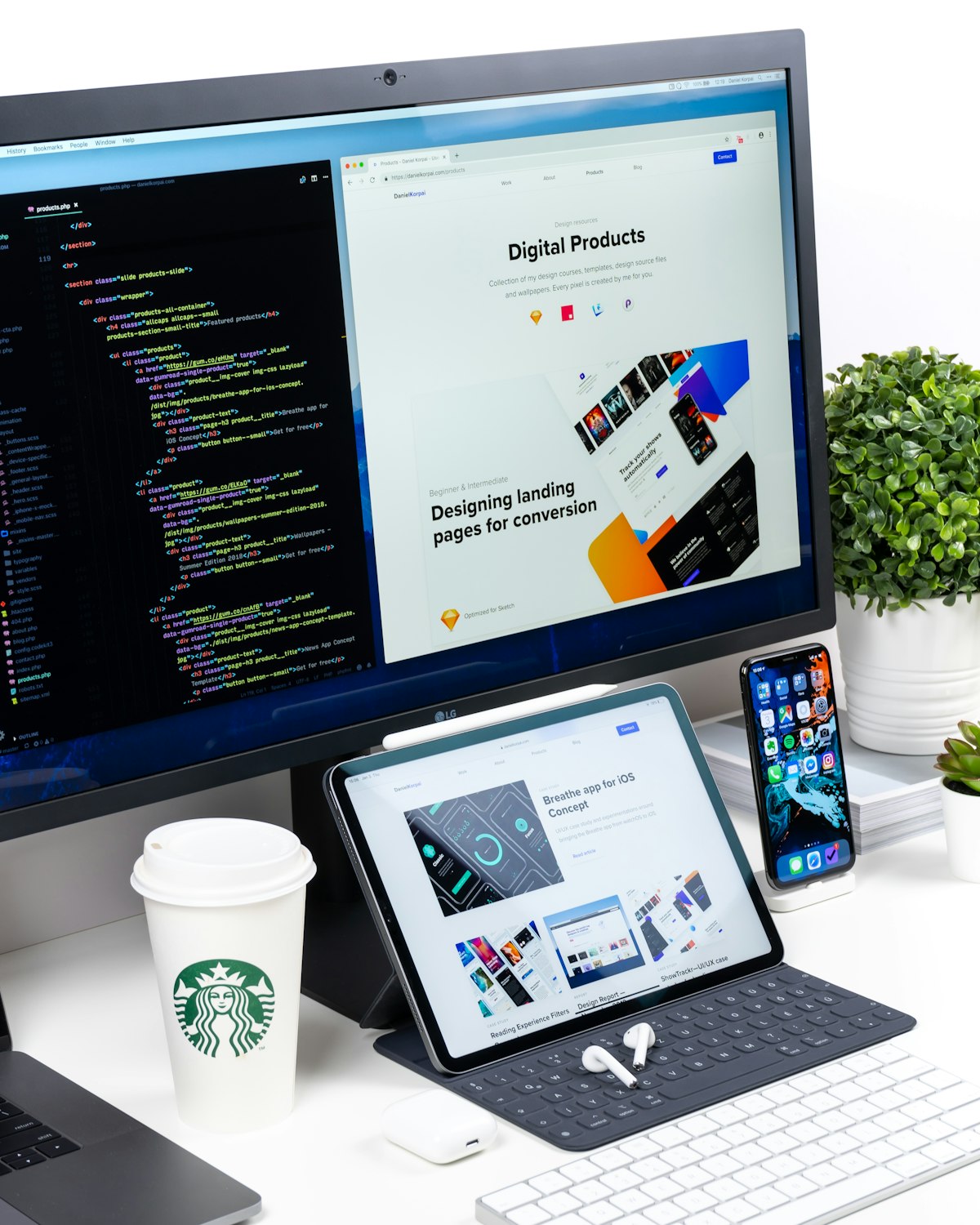


The importance of digitization and online operations has grown in this Covid-struck world. The achievement of all software applications has been pushed by Front-end technologies like Front-end Frameworks and more.
The back-end is also important, but it is the front end that the user encounters first.
Front end Frameworks
A bit of software that aids the maintenance and development of large projects is called a framework. These are a collection of basic software modules including prepared code that programmers could use to fix general programming tasks like trying to define a file structure or handling AJAX requests.
These frameworks are what specify the rules for developing the app architecture. Code libraries, utility programs, scripting languages, and other software that facilitate the implementation and development of multiple components of a large software product are examples of frameworks.
Developers don't have to start projects from scratch when there are frameworks, instead, they get a foundation for implementing other project-specific features.
The front-end in web development is the graphical user interface of a website or application. Or, you might also say that it is the part of the application that visitors could see and engage with. Therefore, this section has to be designed in a manner that is user-friendly so that knowledge from the server side is effectively imparted.
Thus, front-end frameworks are software platform that acts as the foundation for the development or maintenance of front-end components of web solutions.
Best 10 Front-end Technologies for Web Development
1. React

Also known as React JS, React, is a famous front-end JavaScript library for the development of user interfaces and related components. The MVC architecture is employed here, with a different table of presentation and data availability. The Virtual DOM is one of its distinguishing features and the way it handles document access and manipulation. Causing them to behave similarly to a tree structure, and each HTML element functions as an object, the DOM interacts well with XML and HTML documents.
It is powered by Facebook and has been recognized as a fantastic library in the front-end family of tools. The JSX coding style is used here with a mix of tag syntax and HTML quotes to create the components. The larger components are broken down into smaller ones that can be managed separately and individually. Developers' overall productivity is bound to rise with this feature.
Pros:
- Collaboration and reuse in other parts of the application are facilitated by component reusability.
- You can achieve consistent and seamless performance through the use of virtual DOM.
- As it allows you to write components without classes and makes learning React easier, it is the ultimate solution to writing components in React hooks.
Cons:
- The tools here are advanced and extremely useful.
- It is hard to create proper documentation due to the framework's multiple and constant updates, which has an effect on the learning curve for beginners.
- Developers find it difficult to understand the complexities of JSX when starting out with the framework.
- Solutions for the front-end are provided only.
Used by:
Groupon, Microsoft, Walmart, Netflix, PayPal, Google, Uber, Facebook, eBay, LinkedIn, etc.
2. Angular

The best front-end framework in the market at the moment, Angular is dominating the list of web front-end frameworks. It is a framework that will help you create advanced and efficient single-page applications. Developed by Google, it is a Typescript-based development platform. Angular is a component-based framework that is used for the development of scalable web applications, plus as a set of tools for developers while creating, testing, and modifying code, and a collection of well-integrated libraries.
You can scale single-page applications to enterprise-level applications using Angular, based on your needs. It has a lot of features.
Pros:
- To upgrade adjustments done in the model to the view and vice versa, there is built-in functionality.
- As most important features, such as two-way data binding, are provided by default, the amount of code is decreased.
- The components are decoupled from their dependencies by defining them as external elements.
- When using dependency injection components are reusable and simple to manage.
- A large support and learning community.
Cons:
- There are numerous ways to accomplish the work as Angular is a complete dynamic solution, and therefore learning curve is steeper.
- Due to their complex structure and size, dynamic apps occasionally fail to perform well.
Used by:
Gmail, Upwork, PayPal, Forbes, Xbox, Deutsche Bank, Santander, Blender, Microsoft Office, etc.
3. Vue.js

A progressive, modern MVVM framework, Vue.js, takes advantage of incremental adoption to the greatest extent possible. As one of the best libraries of JavaScript, Vue.js, has been creating interactive UI elements that are easy to adapt and lightweight. Through a flexible and straightforward API, it provides data-reactive elements. It is quite easy to complete smaller projects and then move up to the larger ones.
Pros:
- Fast and Tiny.
- Beginner-friendly.
- Simple syntax
- Detailed documentation
- It has a positive effect on SEO.
- Two-way data binding
Cons:
- There is a lack of plugins.
- Language barriers.
- New and created by private individuals.
- The developer community is small.
- Not much applicable for larger projects.
- No powerful business behind it.
Used by:
Grammarly, Xiaomi, Adobe, Alibaba, Trivago, GitLab, Netflix, Facebook, Reuters, Nintendo, etc.
4. Svelte

An innovative JavaScript compiler, Svelte, is designed to produce high-performance user interfaces. It was created by Rich Harris in 2017 and is still in the early stages of development.
As it does not employ a virtual DOM, it becomes a distinct characteristic of it. Instead of the virtual DOM, it employs a specialised JavaScript Virtual Machine which is designed specifically to create user interfaces. Through this, Svelte becomes 10 times faster than other platforms such as React and Angular frameworks.
Pros:
- Better reactivity
- Latest of all
- Faster than Angular or React
- Scalable framework
- Simple, Lightweight, and using the existing JavaScript libraries.
Cons:
- Lack of support
- Small community
- Lack of tooling
- Not much popular yet
Used by:
Chess, Godaddy, HealthTree, Philips, BlueHive, Cashfree, Rakuten, Razorpay.
5. jQuery

One of the more famous and the oldest framework available is jQuery. It was created by John Resig. It is fast, small, rich in features, and one of the best front-end JavaScript frameworks library. Being a cross-platform library, it intends to make client-side HTML scripting easier.
jQuery makes tasks like document traversal, event handling, Ajax, animation, and manipulation much easier with an API that works across a wide range of web browsers. jQuery has revolutionized the way designers write JavaScript with its extensibility and versatility.
Pros:
- Adaptability in terms of adding and removing elements.
- Streamlining of the process of sending HTTP requests.
- Dynamic content is allowed.
Cons:
- Relatively slow working speed.
- Many advanced alternatives are available.
Used by:
Bank of America, Uber, Udemy, Twitter, Twitter and JPMorgan Chase.
6. Backbone.js

Providing web applications with proper structure by supplying models with customised events and major key-value binding, Backbone.js, is one of the more prominently known JavaScript libraries. Here, you will find libraries of enriched APIs including functions, declarative event handling and views. Via a RESTful JSON user interface, it communicates well with the current API. As it uses two JS libraries, it is quite lightweight.
Pros:
- Extensible; you can find more than 100 available extensions
- Beginner-friendly
- Fewer requests to HTTP
- Very small size.
- In-depth tutorials.
- Instead of storing data in DOM, it stores it in models.
Cons:
- Two-way data binding is not supported.
- Perplexing Architecture.
- Writing more code is required.
- It is believed to be getting obsolete by many developers.
Used by:
Pinterest, Uber, Coursera, Master Card, Walmart, Reddit, LinkedIn, Roblox, etc.
7. Ember.js

Make sure that you keep an eye out for this open-source framework. You can use this to develop modern user interfaces or internet solutions, mobile and desktop apps and other cross-platform applications.
The MVVM pattern is adhered to. By default, for each new entity, Ember generates a testing programme, which is a very useful feature.
Pros:
- Consistent documentation
- Server-side rendering
- Widget based approach to components
- Native testing and debugging tools
- The data binding is two way.
- URL-focused approach
- Well-organized community
- Supports TypeScript & JavaScript
Cons:
- Rough for beginners
- Not very suitable for small projects
- Heavyweight
- Component reuse capabilities are lacking.
- Little or no customization.
Used By:
Chipotle, Blue Apron, Nordstrom, Tinder, Netflix, PlayStation Now, and Vine Apple Music, Yahoo!, LinkedIn.
8. Semantic-UI

Another newcomer to the front-end framework market is Semantic UI. Created by full-stack developer Jack Lukicthis, Semantic-UI is a CSS framework that is based on organic language syntax. It is powered by LESS and jQuery. It quickly took a top rank among the JavaScript projects on GitHub in 2015.
Pros:
- Organic code is self-explanatory in nature.
- Responsive and rich UI components
- Has integrations with Meteor, Ember React, and Angular.
- A good choice of themes.
Cons:
- The community is relatively small.
- Beginners with limited knowledge of JavaScript will not find it easy.
- Few recent updates
- To develop custom configurations some proficiency is required.
Used by:
Kmong, Digital Services, Snapchat, Accenture, Ovrsea.
9. Foundation

Designed to help developers quickly prototype and build websites, Zurb's Foundation is another powerful front-end framework. Both CSS and HTML components are included in it along with JavaScript plugins, and Sass variables, plus all of the functionality required for developing modern web applicaitons.
Unlike other frameworks, Foundation focuses on creating prototypes rather than production code. Thus, the teams are enabled to move quickly from a design to a functional prototype without having to spend time writing code.
Pros:
- Flexible grids.
- You can create exquisite looking websites.
- HTML5 form validation library.
- For different devices and media, you get a customized user experience
Cons:
- Tough for beginners
- Fewer support platforms and community forums.
- There are some competitors which are more popular than Foundation.
Used by:
FireFox, ebay
10. Preact

Yes, React is the most popular front-end development framework, but it has a few flaws. The idea of creating a small-size framework with similar features to React came out of this idea. Thus, Preact is a tiny version of React.
Both of them have the same API and they use the same app development methodologies. But, Preact is a lot smaller in size and thus it employs the fastest and thinnest virtual DOM possible.
If you want to create a small application with not many complex integrations, this is will work just fine for you.
Pros:
- The benefits of React-style elements are used but it is built with Backbone and jQuery.
- The performance is improved while developing an app.
- All of these characteristics are embodied by the React community.
Cons:
- Incompatible with the React prototype.
- No support is provided for React's synthetic event use.
- No context support.



